
At EventPipe, we know sports are much more than just games and competitions. They are a great opportunity to foster teamwork, unity, and personal growth. While we specialize in event housing management for sports tournaments and other events, we firmly believe that team camaraderie can play a significant role in the fantastic experience we aim to provide.
Creating a unified team requires more than just practice, skill drills, endurance training, and in-game experience. Ultimately, it's essential to incorporate team-building activities that extend beyond the playing field. Such activities play a crucial role in helping young athletes understand the value of collaboration, effective communication, mutual respect, and trust — all of which are essential to successful team dynamics.
Every team is unique, but the goal to create an environment that nurtures growth, encourages positive interactions and ultimately drives team performance is universally the same. Let's dive in and start fostering the team spirit that every youth sports team needs to succeed.
By participating in youth sports, children and young adolescents aren’t just playing a game! They’re developing physically, mentally, and socially while learning critical life skills and values.
Team-building activities encourage open communication and better understanding among participants. They make it easier for individuals to express their thoughts, listen to others, and give and receive feedback, thus improving interactions within the team.
Team-building activities also serve as a powerful tool for cultivating a fun and positively engaged team culture. They foster an atmosphere of shared enjoyment, collaboration, and achievement by encouraging participants to work together towards a common goal.
Picking team-building activities that tie directly into a specific sport makes the connection between the exercise and game-day coordination much more obvious for younger players.
Sometimes getting leaders to emerge from their shells isn’t always easy. Team-building activities help identify potential leaders. Through these activities, they develop essential skills such as decision-making, taking initiative, motivating the team, delegating priorities, and coordinating with others.
Learning sportsmanship is key to the development of a well-rounded athlete, and team-building activities help them develop fundamental skills in this area. Some of these include respect for others, fair play, winning and losing gracefully, team spirit, healthy competition, and good conduct.
Here are some tried-and-tested activities that will bring your team together. These activities are especially an excellent option for traveling sports teams since there is much time to fill outside games and practices.
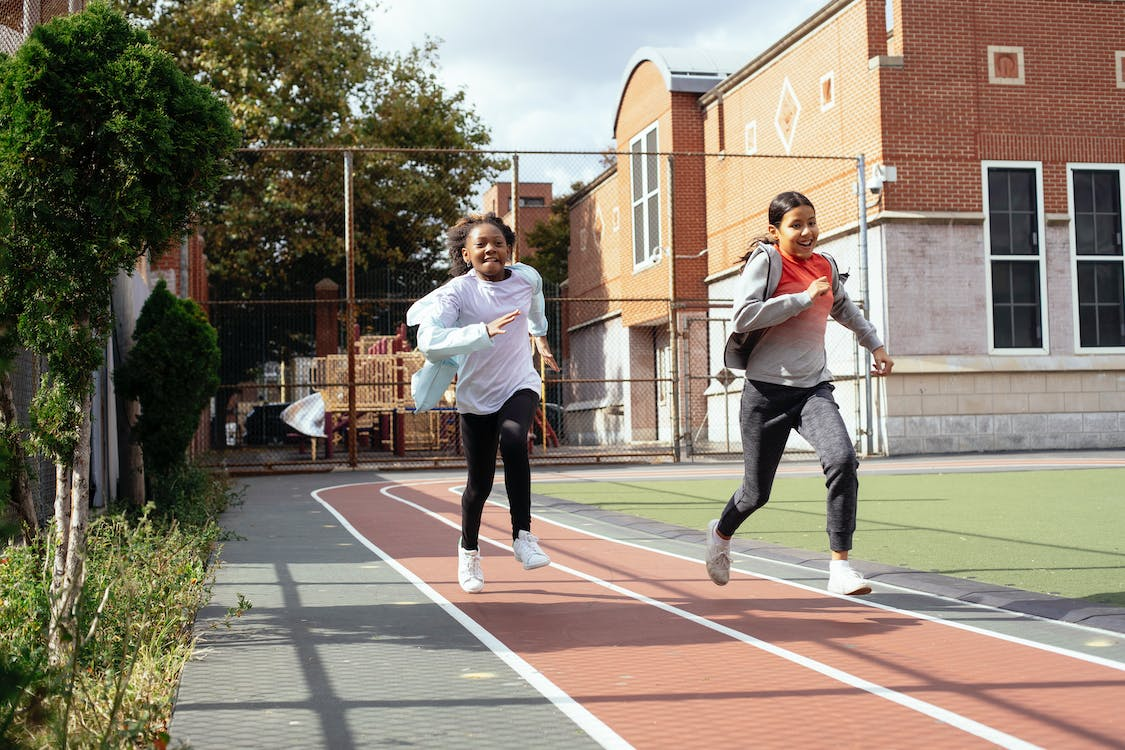
Races work for all teams, whether on the ice, in the pool, in the arena or on the field. Modify them to be more interesting and challenging to your group. Some variations include obstacle relays, three-legged races or reverse races.
This presents an excellent opportunity to initiate other activities. It involves the group lining up in order of established criteria – shortest to tallest, youngest to oldest, in alphabetical order – without talking. This exercise develops nonverbal communication and teamwork.
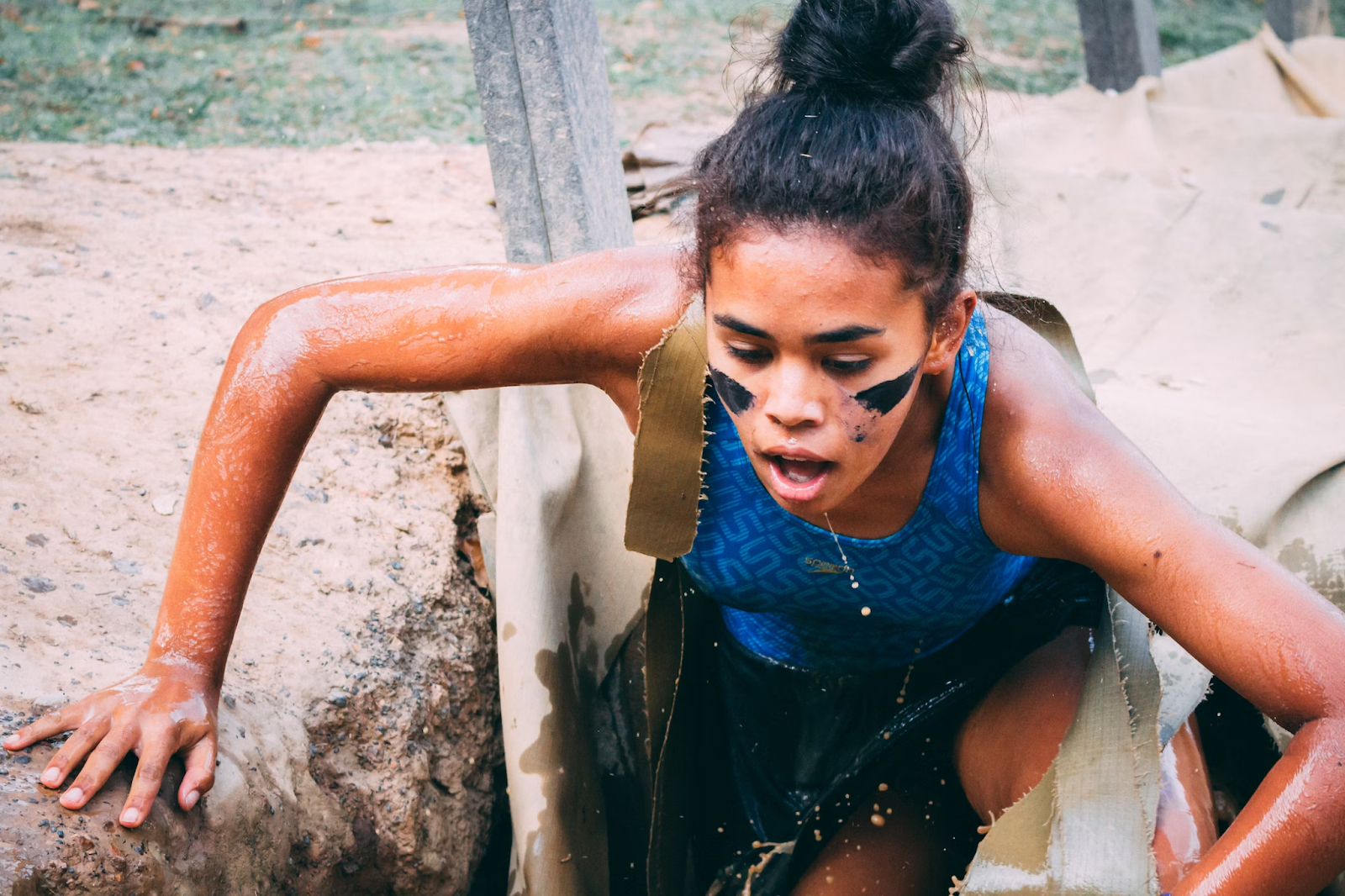
Design your obstacle course to suit your group, with each obstacle presenting a unique problem to solve. Team members must quickly brainstorm, deliberate, and decide on a solution, engaging their minds and collaborating to achieve common goals.
Individuals or teams compete to find items or complete tasks from a pre-prepared list within a specific timeframe. The game can take place in a defined area, such as a gym or park, or it could encompass a larger area, like an entire city or town. This activity encourages critical thinking and teamwork.
Kids rarely enjoy conditioning exercises, but they’re key to becoming better athletes. Make drills and exercises more enjoyable by having the team participate together. Team conditioning enables members to support and motivate one another, fostering healthy competition that enhances team dynamics and cohesion.
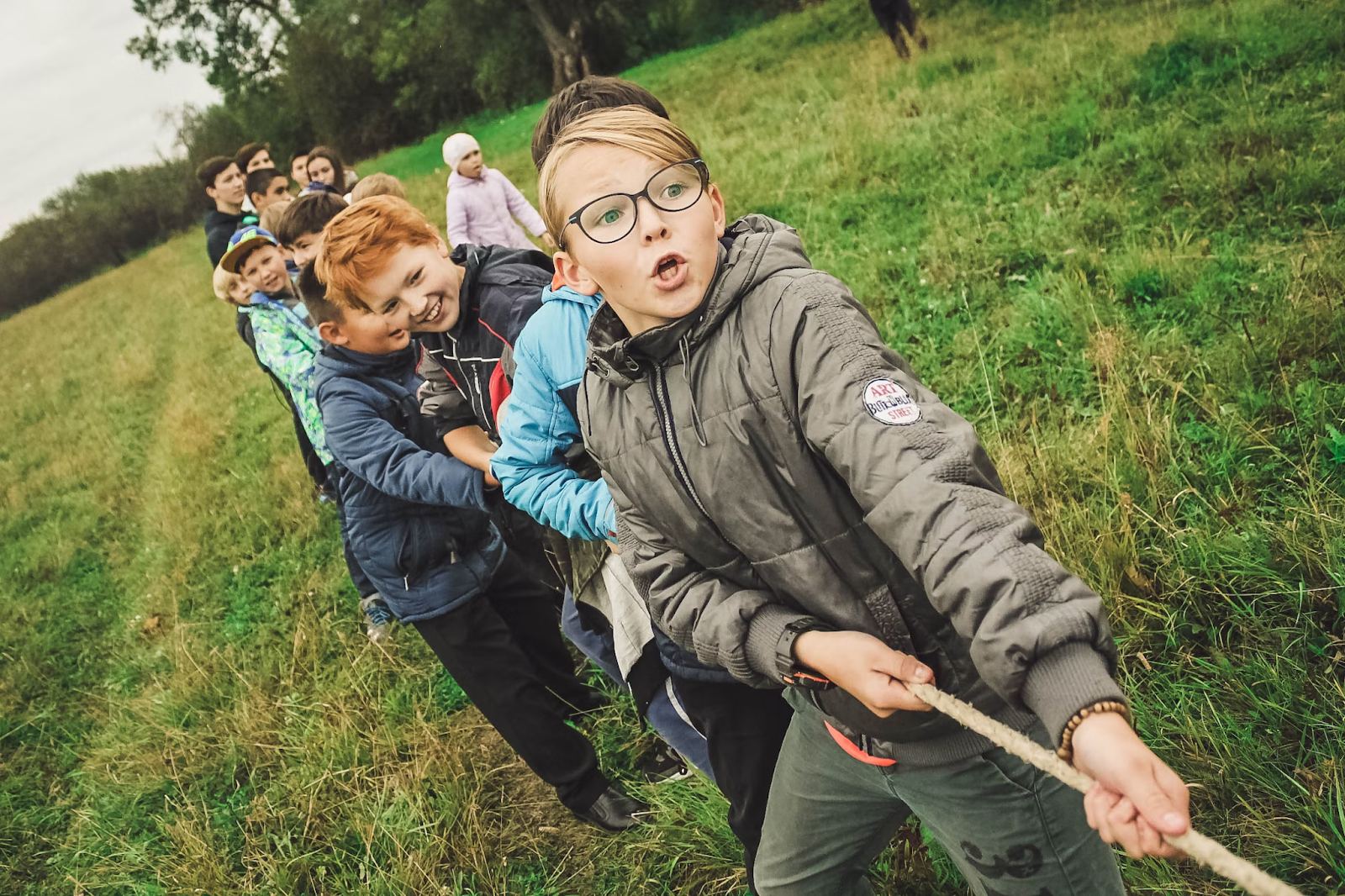
A classic game that tests strength, stamina, and team cooperation. It fosters unity as teams must work together to succeed. Split the teams into even groups and establish a center line on the ground using a field marker, a drawn line, or a cone. Mark the center of the rope with a ribbon or bandana. The team that pulls the rope over to their line first wins.
Players form a circle, cross their arms in front of themselves, and hold the hands of two different people, creating a 'knot.' The task is to unravel the knot without breaking the chain, promoting problem-solving skills and collaboration.
This one’s especially fun for younger children. The team forms a circle and quickly passes around a ball or other object that is the “hot potato.” Music plays as the potato makes its way around the circle. When the music stops, whoever is holding the potato is out. As the gaps between players grow wider, the game becomes more challenging, promoting quick thinking and physical coordination.
This classic winter game is enjoyable for all ages and accommodates groups of any size, particularly those involved in winter sports such as hockey, basketball, and swimming. Playing in teams develops teamwork, communication, and problem-solving skills, while also helping to build trust and improve morale. Organizers have the option to make the game as structured as they’d like by adding set guidelines on how to determine the winning team. Prefer a different snow sport? Try a day of sledding or have your team work together to build snow forts.

This trust exercise works best in pairs or small teams. Put a blindfold on one player, and their partner or team must guide them through an obstacle course, using only verbal instructions. It fosters active listening, enhancing trust and communication.
In this game, players pair up and tie their wrists together, similar to tying their legs together in a three-legged race. Then, they must complete an obstacle course together. Through the exercise, players must communicate effectively, problem-solve, and work together to overcome the given challenges.
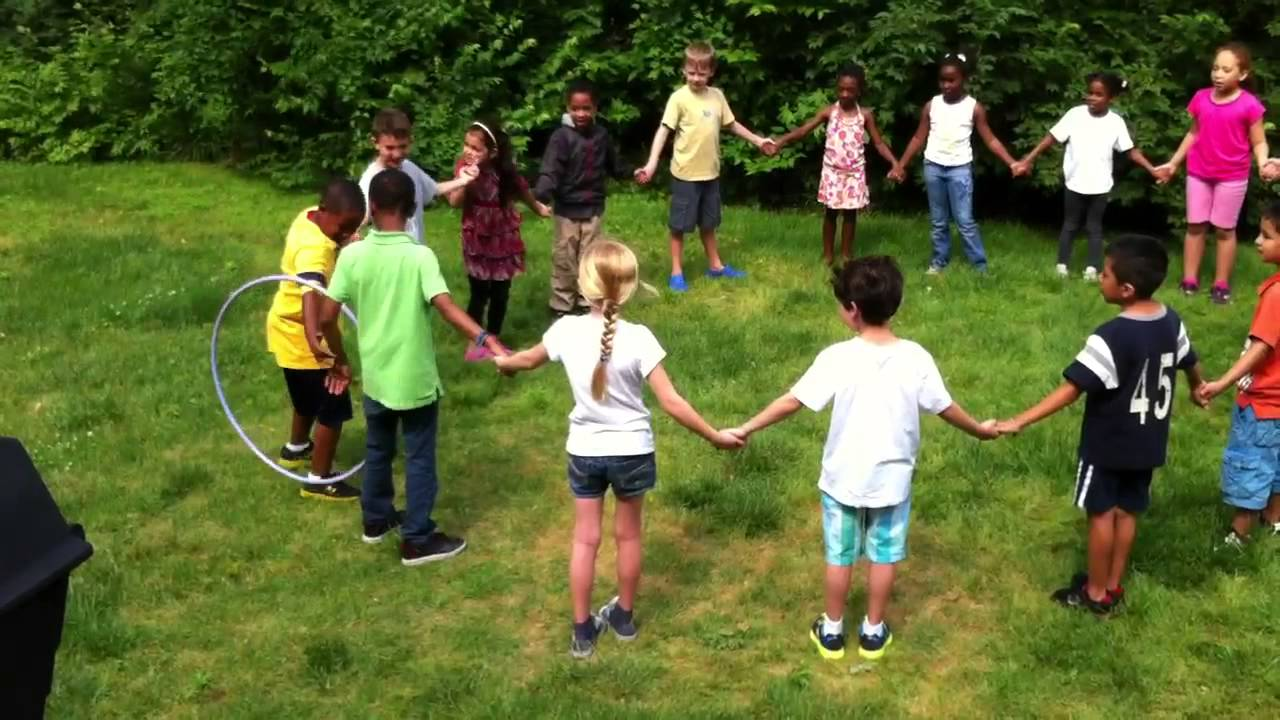
Have your group stand in a line or circle holding hands. The goal is to pass the hula hoop down the line or around the circle over their bodies without breaking the chain. This exercise requires trust and coordinated efforts, which can foster unity, communication, and a strong sense of team synergy.
Charades is a classic game in which players must act out a word or phrase without speaking, while their team tries to guess what it is within a specific time frame. By playing charades, participants improve their non-verbal communication skills and enhance their problem-solving abilities.
Social gatherings such as team dinners provide a relaxed setting for players to build relationships organically. Conversations around team successes and opportunities for improvement help boost morale, a sense of belonging, and motivation.
An Escape Room Challenge is a game where a team of players cooperatively discovers clues, solves puzzles, and accomplishes tasks in one or more rooms to progress and ultimately escape within a set time limit. The challenges are lots of fun and encourage communication, collaboration, and problem-solving under pressure.
Paintball is a team sport that involves players eliminating opponents by tagging them with paintballs. This fun activity encourages cooperative strategy and teamwork under pressure; however, for safety reasons, it works best for older students, such as high schoolers.
Capture the Flag is a traditional outdoor game in which two or more teams each have a flag (or a similar object). The objective is to capture the opposing team's flag, located at their base, and return it safely to their base. The game encourages team members to interact and cooperate in ways that can lead to improved team dynamics.
An outing to a local sports game offers an excellent opportunity for team building in a relaxed and fun environment, outside the usual context of training and matches. Opt to watch an event completely unrelated to your own or choose a professional version of your sport. Allow your team to comment on the game or match and discuss their impressions and observations. This helps them develop a deeper understanding of the game.
Not all team-building activities need to have a direct connection to sports. Working together to serve the community can deepen connections between team members. Consider volunteering for local events, organizing a donation drive, or offering a hockey clinic for younger players.
Another way to deepen the bond between your team is to have them organize a fundraiser, whether it benefits the team itself or another community organization. Car wash drive, anyone? The feeling of satisfaction and fulfillment they’ll receive after working together to reach their goals is priceless, not to mention the fun they had getting there.
.png)
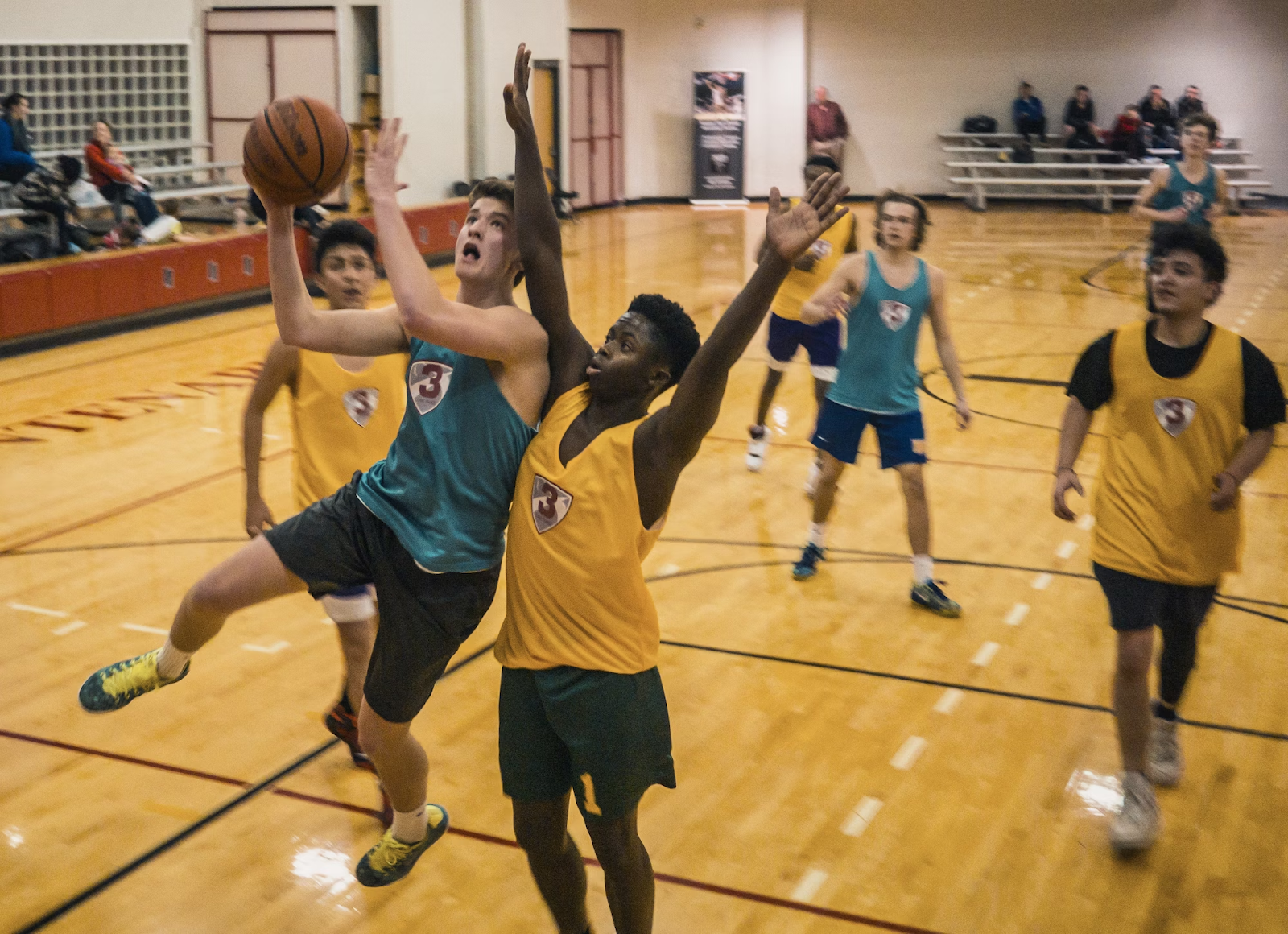
Here are some great team-building activity options to do outside:
Here are some options if you don’t have any equipment on hand:
These games are great for indoors:
No matter which activities you choose, the best team-building activities depend on your team's dynamic, age range, and interests. Be sure to choose exercises that will be fun and beneficial for everyone involved.
Once the fun is sorted, a room block management platform takes care of the less exciting part: getting every family checked into the right hotel. And if you need help with any of your sports tournament housing, put EventPipe on your team.
EventPipe is a comprehensive event housing management software designed to revolutionize how you manage accommodations for your events. From sports events to corporate events, festivals, concerts, and weddings, EventPipe's end-to-end solution streamlines the booking process, enhances financial performance, and eliminates the hassle of housing management for both producers and attendees.

Branded website using EventPipe event housing management software.
Ready to revolutionize your event housing management?

Jeff is the Marketing Manager at EventPipe. He brings a decade of Marketing experience with a background in social media, events, SEO, and content. Outside of work, Jeff is an independent Hip Hop artist who regularly releases and performs his music and loves to golf and play ice hockey in his spare time. Jeff holds a bachelor of arts in Economics from Union College, with a minor in Spanish.
