
A hotel RFP, or request for proposal, is a formal document you send to hotels to ask for rooms, rates, and terms for a specific event. For housing companies and event organizers who run on hotel commissions, a strong hotel RFP process is where the money is made or lost, which is why hotel RFP management software has become a core part of how the best operators work.
Get the RFP right and every stage that follows runs smoother. Get it wrong and you pay for it months later at reconciliation.
This guide breaks down what an RFP is, how the RFP process works, what belongs in a hotel RFP template, and how the right tools save time without cutting corners.
Most guides treat a hotel RFP like a one-time form. Send it, pick a hotel, move on. That view misses how this works for anyone managing room blocks across many events.
The RFP sets the terms. Room rates, pricing, commissions, rebates, comp rooms, free breakfast, cutoff dates, and attrition clauses all start here. Every one of those terms flows into the contract, the booking site, and the final invoice. A concession you forget to ask for in the RFP is revenue you can never collect later, which puts your whole budget at risk. The Events Industry Council publishes accepted practices for RFPs precisely because these details carry that much weight.
So treat the RFP as the foundation of the whole event housing lifecycle, from hotel identification through invoicing, the same end-to-end flow that room block management software is built to handle.
“The biggest mistake is not writing down clear rules for attrition and cancellation when you first sign the deal. Housing companies spend a lot of time negotiating price and perks, but then leave the attrition rules fuzzy, or just assume the hotel's normal rules are fine. That's the problem. When the rules are fuzzy, the hotel almost always wins later when it's time to settle up. If you don't spell out exactly how pickup, cutoff, and wash are counted before you sign, you won't know what you owe until it's too late." - Patricia Driscoll, Director of Customer Success & Support at EventPipe
The hotel RFP process follows a clear path. Knowing each step helps you spot where time and money leak out.
Begin with the event venue and the event dates. Where is the event, how many people are coming, and which nights do they need rooms? These basics shape every proposal a hotel sends back.
Build a profile that hotels can act on. Include room types, the number of room nights you expect, meeting space, technology needs, and the services your guests expect. The more relevant information you give, the better the hotel proposals you get back. Effective RFPs give hotels everything they need to respond fast.
Sourcing hotels for a company event follows the same profile, where peak arrival nights and meeting space shape the responses more than total headcount does.
Ask for pricing on the space itself in the same request, so the rental, AV, and catering minimums arrive alongside the room rates instead of weeks later.
Submit RFPs to several hotels at once. For a large event you may need multiple properties to cover demand. Sending detailed proposals to different vendors lets you compare options side by side instead of working one hotel at a time. Done by hand, this process gets time consuming fast.
Set those priorities before proposals arrive. Decide what matters most: hotel rates, location, services, room types, or commission terms. Clear selection criteria turn a messy review into a fast evaluation process.
Weigh each hotel against that selection process, then negotiate. Good negotiation comes from mutual understanding and clear information, not pressure. Compare room rates and concessions across vendors so you know where you can push on pricing and protect your budget.
Once you and the hotel agree, the terms move into a signed contract. Watch for attrition clauses that can leave you paying for rooms you do not fill.
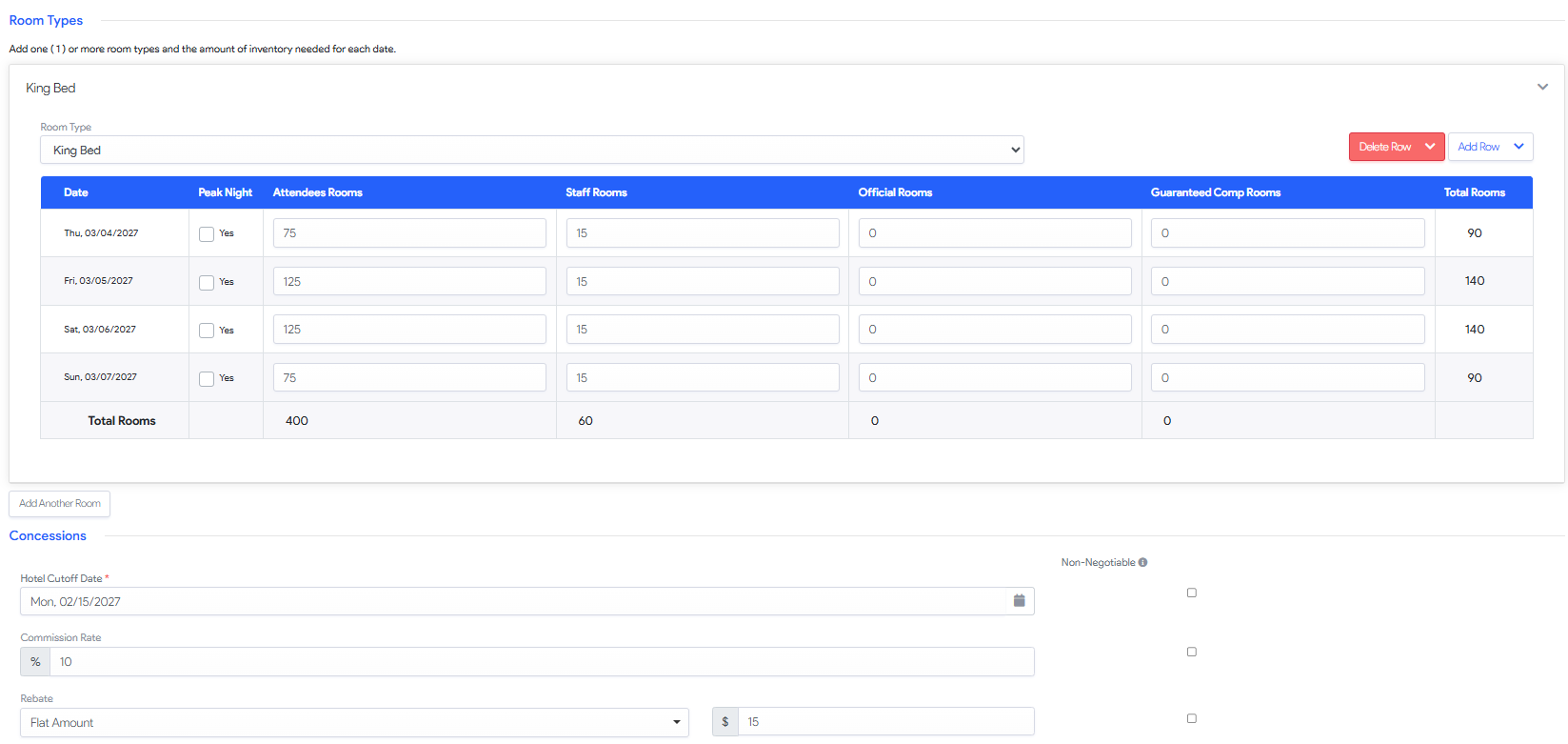
A good template keeps your RFPs consistent across every event and every hotel. At minimum, your template should cover:
A consistent template saves time and stops you from leaving a budget on the table when you send RFPs under pressure.
Running the process by hand works until you scale. One event with three hotels is manageable in email and spreadsheets. Thirty events across multiple room blocks and properties is a different story.
Things break in predictable ways. Versions get out of sync. Follow-ups with quiet hotels fall through. Terms you negotiated never make it into the contract. Instead of investing time in new business, staff burn hours on copy-paste work. Housing companies, travel management companies, travel managers, and event planners all hit the same wall: manual work caps how many events the business can take on.
Corporate travel teams hit that wall sooner, since tools built for individual trips were never meant to source business travel accommodations for forty people arriving on the same night.
"The first thing that changes is speed. Instead of digging through email threads and old spreadsheets to compare hotel bids, you can see everything side by side in one place, so decisions that used to take days now take minutes. What surprises people most is how many mistakes were slipping through before. Spreadsheets don't catch it when a term changes between drafts or when a hotel quietly shifts a deadline. Software does. Most teams don't realize how much revenue they were losing to small, missed details until they stop losing it." - Patricia Driscoll, Director of Customer Success & Support at EventPipe
See how it works: Book a demo.
The right RFP tools remove the busywork so you can focus on terms and relationships. Strong RFP tools connect the whole process in one place.
Here is what good software delivers:
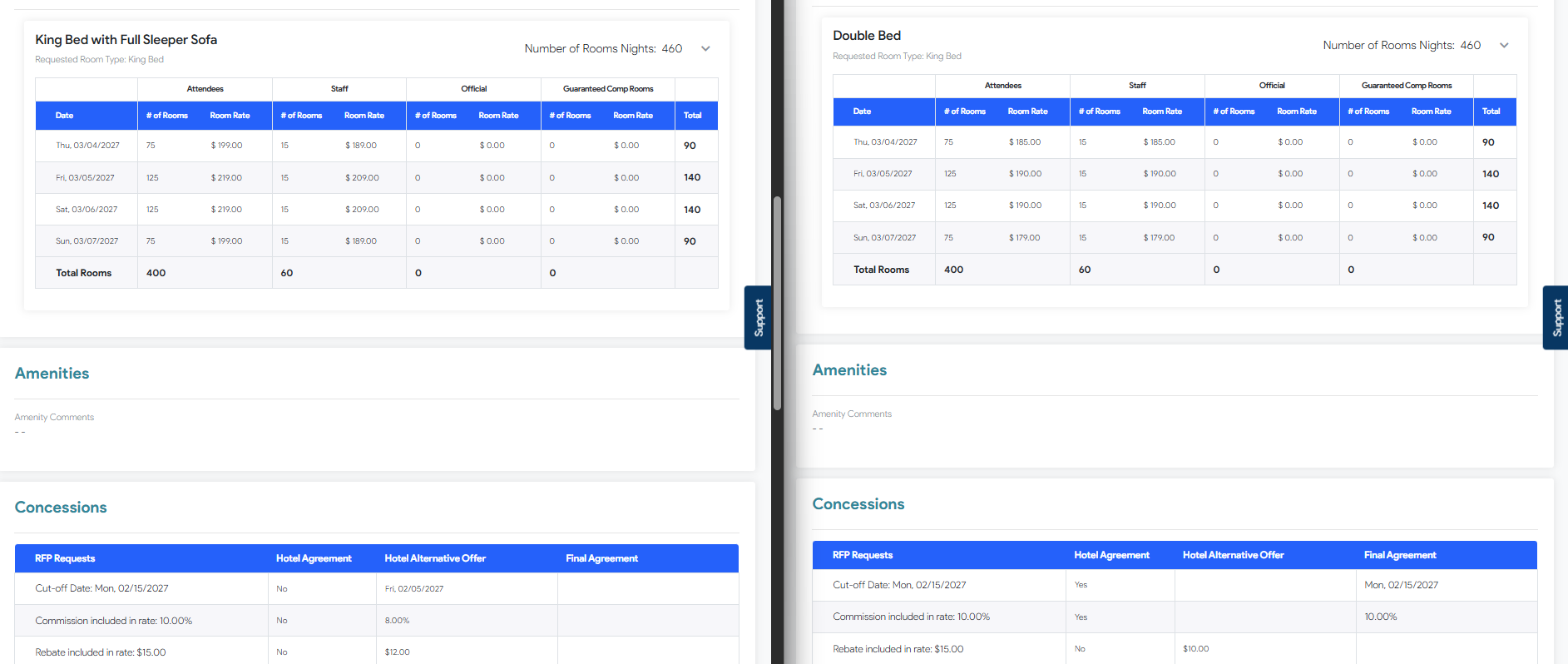
EventPipe was built for exactly this. Its hotel RFP management tools let housing companies source, compare, and contract rooms across many hotels and room blocks without the manual drag. Travel managers and event planners get the same speed: less time chasing vendors, more time winning new business and growing the business. It saves time on every event and protects your budget. Stack Sports (TeamINN) grew 80% in 18 months after moving to smarter hotel booking software.
“Experienced pros almost always push for a cumulative attrition clause instead of a per night one. It's a small thing to ask for, but it makes a big difference later. Newcomers tend to skip it because they don't realize how much it matters until they get a bill that's way higher than they expected. Experienced pros also push hard for clear pickup reporting during the block, not just a final number at the end. That way you can catch a problem early instead of finding out about it after it's too late to fix." - Patricia Driscoll, Director of Customer Success & Support at EventPipe
A hotel RFP is more than a form. It is the first move in a process that shapes your pickup, your commissions, and your customer satisfaction long after the event ends. Treat it that way, and the rest of the work gets easier.
See how EventPipe helps housing companies, travel managers, and event planners run hotel RFPs at scale. Request a demo.
Send your RFP as early as you can, often six months to a year out for large events. Hotels need time to review complex submissions, check availability, and respond with full proposals. The more rooms and services you need, the earlier you should send it.
A hotel RFP is the document you send to ask hotels for rates, rooms, and terms. A hotel contract is the signed agreement that locks in the terms both sides accept. The RFP starts the conversation, and the contract makes it binding.
Yes, and you should. Sending the same RFP to several hotels lets you compare bids fairly and negotiate better pricing. Good software makes this simple by managing every response from one place.